
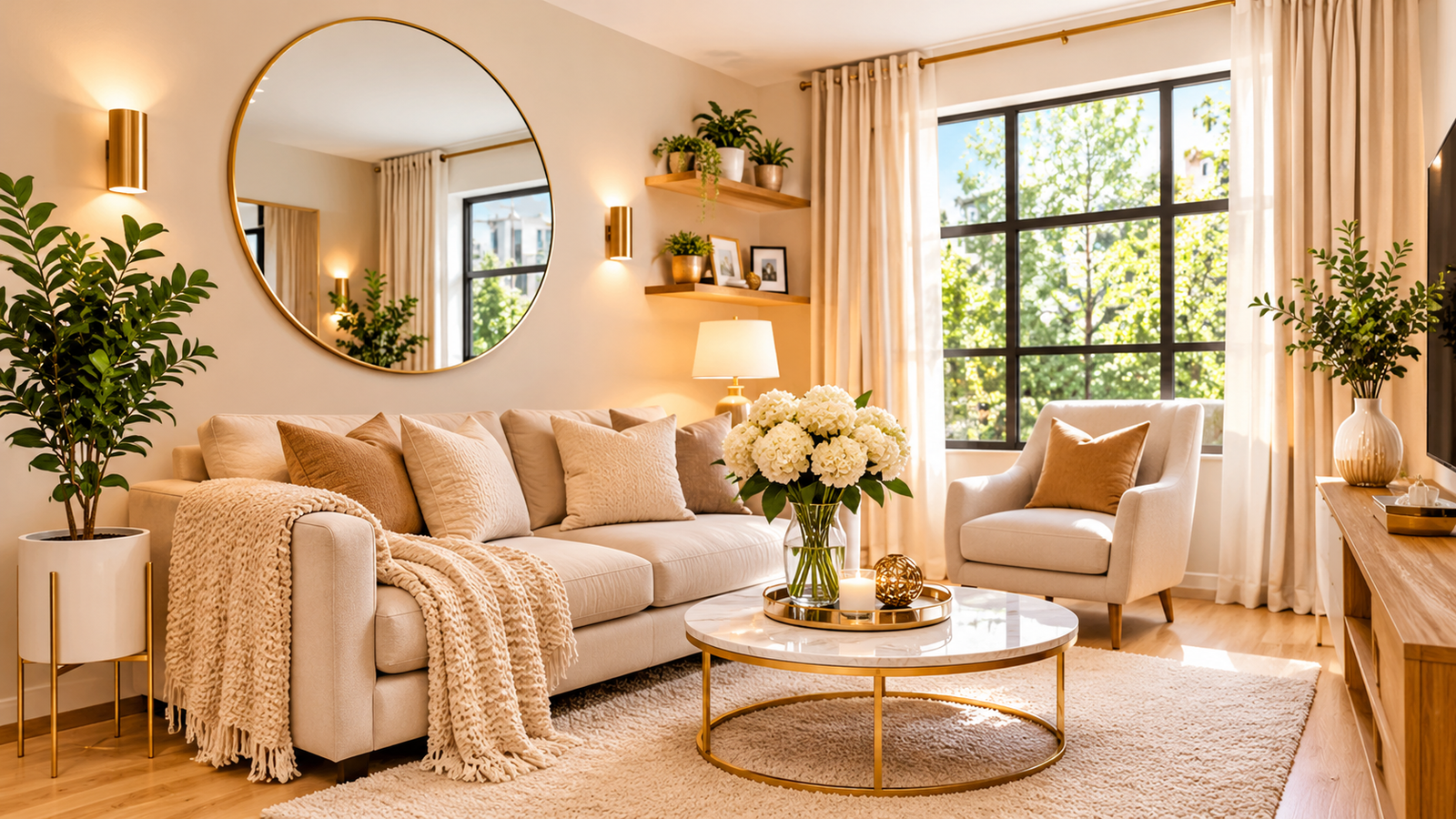
Have you ever looked at your living room and wished it felt just a little bigger? Maybe your sofa takes up too much space, your furniture feels crowded, or there simply isn’t enough room to add the decorations you love.
The good news is that you don’t need to knock down walls or spend thousands of dollars on renovations to create a more spacious-looking home.
With the right small living room decorating ideas, even the tiniest space can feel open, comfortable, and beautiful. A few thoughtful changes to your furniture, colors, lighting, and layout can make a surprising difference.
Whether you live in a small apartment, a compact house, or simply have a limited living area, these 21 decorating ideas will help you make the most of every corner.
Let’s explore some practical ways to transform your living room into a space you’ll love spending time in.
1. Choose Light and Neutral Wall Colors
One of the easiest ways to make a small living room appear larger is to choose light wall colors.
Shades like warm white, soft beige, ivory, and light gray help reflect natural light throughout the room. This creates a brighter atmosphere and makes the walls feel less visually heavy.
You don’t have to make everything completely white. A combination of cream walls, beige furniture, and light-colored accessories can create a beautiful and welcoming interior.
If you enjoy a little color, consider soft sage green or pale blue. These shades add personality without making the room feel overwhelming.
Styling Tip: Use similar light tones on your walls, curtains, and larger furniture pieces to create a smooth visual flow.
2. Add a Large Mirror to Create the Illusion of Space
Mirrors are one of the most useful decorating accessories for small rooms.
A large mirror reflects light and creates the illusion of additional depth. When positioned correctly, it can make a compact living room feel noticeably more open.
Try placing a large mirror opposite a window so it reflects natural daylight into the room.
You can also choose a floor-length mirror or a decorative mirror above your sofa.
For a modern look, consider a simple round mirror with a thin gold or wooden frame.
The secret is choosing a mirror that complements your existing furniture instead of competing with it.
3. Select a Compact Sofa That Fits Your Room
A large sofa might look beautiful in a furniture showroom, but it can easily overwhelm a small living room.
Instead, choose a compact sofa with clean lines and a simple design. A two-seater sofa or a small apartment-sized sectional can provide comfortable seating without taking over the entire room.
Raised legs are another useful feature. When you can see the floor underneath your furniture, the room often feels lighter and less crowded.
Consider neutral upholstery such as cream, light gray, or beige. These colors are easy to coordinate with different decorating styles.
Styling Tip: Measure your living room before purchasing furniture. Leave enough room to walk comfortably around the sofa and other pieces.
4. Use Furniture with Hidden Storage
Clutter can make even a reasonably sized living room feel cramped.
Furniture with built-in storage helps you keep everyday items organized without adding extra cabinets.
For example, an ottoman with a storage compartment can hold blankets, magazines, and remote controls. A coffee table with drawers can provide space for small accessories.
You might also consider a storage bench near the window.
These pieces serve two purposes at once. They provide useful storage while maintaining a clean and attractive appearance.
5. Choose a Glass or Acrylic Coffee Table
Traditional wooden coffee tables can sometimes make a small room feel visually crowded.
A glass coffee table offers a lighter alternative. Because you can see through the surface, it doesn’t create the same visual barrier as a solid piece of furniture.
Acrylic tables are another stylish option.
Pair your table with a small decorative tray, a candle, and one or two coffee table books. Keep the arrangement simple so the surface doesn’t become cluttered.
This is a particularly useful approach when your sofa and other furniture already occupy much of the available floor space.
6. Install Floating Shelves Instead of Large Bookcases
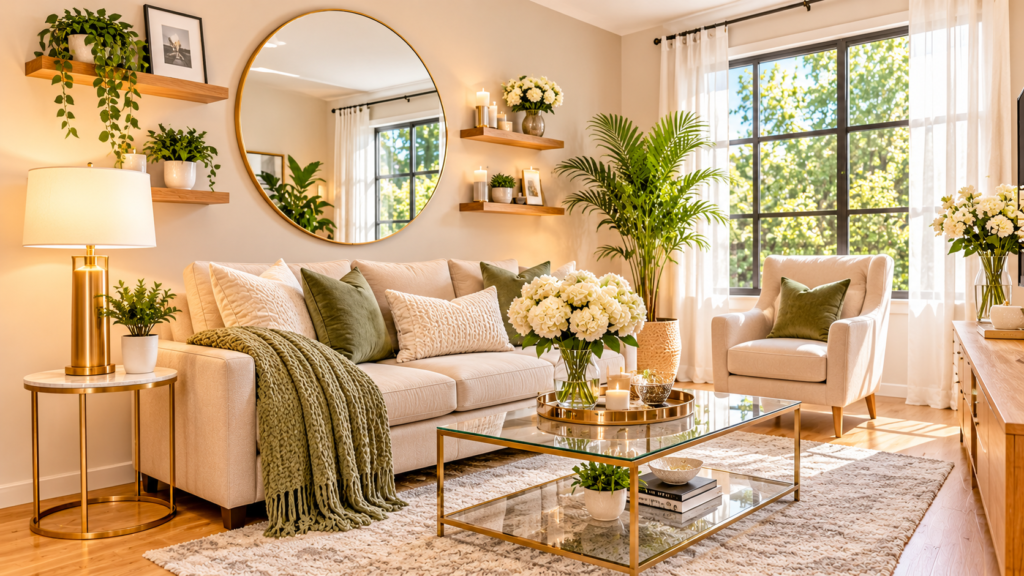
If your living room has limited floor space, floating shelves can be a smart decorating solution.
Instead of using a large bookcase, install a few shelves on an empty wall. They provide storage and display space without taking up valuable floor area.
You can use them to display:
- Small indoor plants.
- Framed photographs.
- Decorative vases.
- A few favorite books.
- Small pieces of artwork.
Avoid filling every shelf with decorations. Leaving some empty space makes the arrangement look cleaner and more intentional.
Wooden floating shelves work particularly well in Scandinavian, modern, and minimalist interiors.
7. Hang Curtains Higher and Wider
Your curtain placement can make a bigger difference than you might expect.
Hanging curtain rods close to the ceiling creates the appearance of taller walls. Extending the rod beyond the window frame allows the curtains to sit outside the glass area when open.
This helps more natural light enter the room.
Choose lightweight fabrics such as linen or sheer cotton. They create a soft appearance without making the windows feel heavy.
For a cohesive look, select curtains in a color close to your wall shade.
This simple decorating trick can make a small living room feel taller and brighter.
8. Use a Large Area Rug to Define the Space
A rug can help visually organize your living room.
Many people assume that a small room needs a tiny rug. However, a rug that’s too small can make the furniture arrangement look disconnected.
Choose an appropriately sized rug that allows the front legs of your sofa and chairs to rest on it.
Neutral rugs, subtle patterns, and soft textures are excellent choices.
If your furniture is already simple, a patterned rug can introduce personality without overwhelming the space.
9. Keep Your Furniture Arrangement Open
Sometimes the problem isn’t the size of your furniture. It’s where you place it.
Pushing too many pieces against different walls can create an awkward layout. Instead, think about how people move through the room.
Keep clear pathways between the entrance, sofa, and other seating areas.
Avoid placing furniture directly in front of windows unless absolutely necessary.
If your living room is especially small, consider removing one unnecessary chair or side table.
A comfortable layout should allow people to move naturally without constantly walking around furniture.
10. Bring Nature Indoors with Small Plants
Indoor plants add life, freshness, and personality to a living room.
However, large plants with wide leaves can take up valuable space.
For smaller rooms, choose compact plants that fit easily on shelves, window ledges, or side tables.
Some attractive options include:
- Pothos.
- Snake plants.
- Small peace lilies.
- Succulents.
- Spider plants.
Hanging planters are another great option because they use vertical space instead of occupying the floor.
Choose simple pots in neutral colors to maintain a coordinated appearance.
11. Use Wall-Mounted Lighting
Floor lamps and large table lamps can occupy more space than you realize.
Wall-mounted lighting offers a practical alternative.
Install stylish wall sconces beside the sofa or near your favorite reading corner. They provide useful lighting without taking up floor or table space.
Adjustable wall lamps are especially useful when you enjoy reading in the living room.
Choose warm-white bulbs to create a comfortable atmosphere in the evening.
A combination of wall lights, ceiling lights, and natural daylight can make your room feel brighter throughout the day.
12. Decorate with Vertical Elements
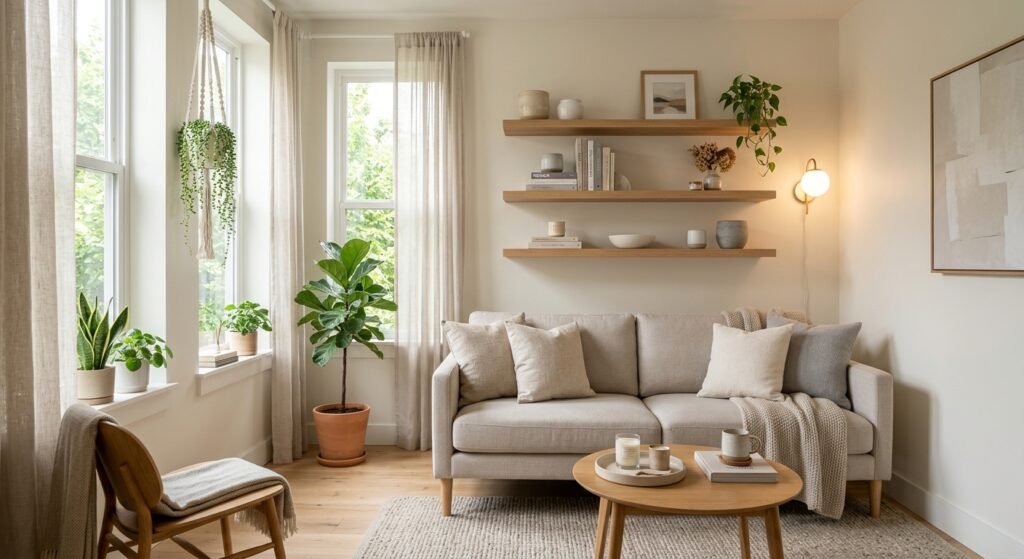
When floor space is limited, look upward.
Vertical decorating elements draw attention toward the ceiling and can make a room appear taller.
Consider tall, narrow bookshelves, vertical artwork, long curtains, or slim decorative wall panels.
You can also create a gallery wall using vertically arranged photographs or artwork.
The goal is to use your wall space creatively without filling every available area.
A few carefully selected decorations often look much better than dozens of small accessories.
13. Choose Multifunctional Furniture
Multifunctional furniture is especially useful in small apartments and compact homes.
Instead of purchasing separate pieces for every purpose, look for furniture that performs more than one function.
For example, a sofa bed can provide extra sleeping space for guests. A nesting table set can be expanded when needed and stored together afterward.
A storage ottoman can work as a footrest, extra seat, and storage container.
These practical pieces help you maintain a comfortable living room without overcrowding it.
When shopping, consider both the size of the furniture and how often you’ll use its additional features.
14. Keep Decorative Accessories Simple
It’s tempting to fill every empty corner with beautiful decorations.
But too many accessories can make a small living room feel busy.
Instead, choose a few items that complement your interior design.
A decorative vase, a beautiful candle, a framed photograph, or a small sculpture can create enough visual interest.
Try grouping accessories in odd numbers, such as three objects of different heights.
This creates a more natural arrangement.
Remember that empty space is also part of good interior design. You don’t need to decorate every surface.
15. Use a Consistent Color Palette
A room with too many contrasting colors can feel visually disconnected.
Choosing a consistent color palette helps different furniture pieces and accessories work together.
For a small living room, consider these combinations:
Cream and Beige: A soft, warm combination that creates a relaxing atmosphere.
White and Light Gray: A clean and modern choice for minimalist interiors.
Sage Green and Warm White: Perfect for a natural and peaceful look.
Soft Taupe and Wooden Brown: A comfortable combination that adds warmth.
Dusty Blue and Ivory: A gentle color scheme that introduces personality without looking too bold.
You can add a few darker accents through cushions, picture frames, or decorative accessories.
16. Create a Beautiful Gallery Wall
A gallery wall is an excellent way to personalize your living room.
Rather than placing several separate decorative items around the room, create one organized display on an empty wall.
Choose artwork, family photographs, illustrations, or simple abstract prints.
Keep the frames in similar colors for a coordinated appearance.
Before hanging anything, arrange the frames on the floor to experiment with different layouts.
A balanced gallery wall adds character without requiring additional furniture.
For a smaller room, avoid covering every wall with artwork. One carefully styled feature wall is usually enough.
17. Make the Most of Natural Light
Natural light can completely change how a small living room feels.
A bright room generally appears more open and inviting than a dark one.
Start by keeping windows clean and removing unnecessary objects that block sunlight.
Choose lightweight curtains instead of heavy materials.
Position reflective accessories, such as mirrors and glass decorations, where they can help distribute daylight.
If privacy is a concern, sheer curtains can provide some separation while allowing sunlight to enter.
Try to avoid placing tall furniture directly beside windows because it may block valuable natural light.
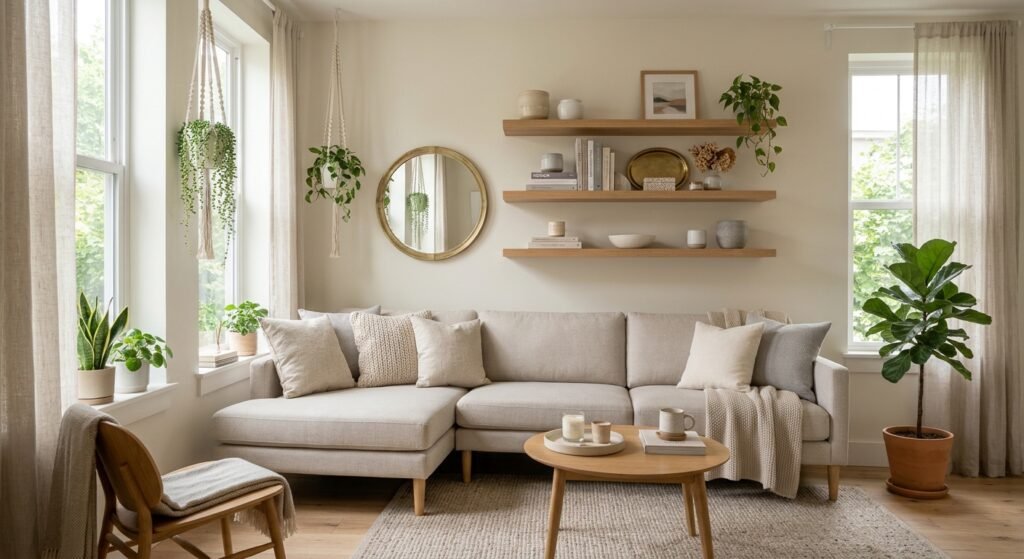
18. Add a Small Sectional Sofa
A sectional sofa can work surprisingly well in certain small living rooms.
The key is selecting the correct size and shape.
An L-shaped sectional can fit neatly into a corner and provide seating for several people without requiring multiple individual chairs.
Choose a design with slim arms and a relatively low back to maintain an open appearance.
Before buying one, carefully measure your room and check the direction of the longer section.
A sectional should improve the layout, not block the main walking path.
19. Use Sliding or Space-Saving Furniture
Traditional furniture often requires extra clearance to open doors or drawers.
In a small living room, this can make everyday movement difficult.
Space-saving alternatives can help.
Consider nesting tables, compact cabinets, sliding-door storage units, and folding furniture.
A folding side table can be especially useful when you occasionally need additional surface space.
Choose pieces that are easy to move and store when they’re not being used.
These small decisions can make your living room more functional without sacrificing style.
20. Create a Simple Focal Point
Every well-designed living room benefits from a focal point.
It gives the eye somewhere to rest and helps the room feel organized.
Your focal point might be:
- A beautiful sofa.
- A large piece of wall art.
- An attractive fireplace.
- A statement mirror.
- A stylish television wall.
Once you’ve chosen the focal point, arrange the remaining furniture and accessories around it.
Avoid creating too many competing visual features.
For example, if you have a large piece of artwork above your sofa, keep nearby decorations relatively simple.
This creates a balanced interior that feels intentional rather than crowded.
21. Keep Your Living Room Clean and Clutter-Free
Sometimes the best small living room decorating idea doesn’t involve buying anything at all.
A clutter-free room naturally feels more spacious.
Start by removing objects you no longer use. Organize remote controls, magazines, cables, and everyday accessories.
Use decorative baskets to store blankets and smaller household items.
Keep coffee tables and side tables relatively clear.
Make a habit of returning things to their proper places at the end of each day.
You don’t need an expensive makeover to enjoy a beautiful living room. A clean and organized space can make a noticeable difference.
Common Mistakes to Avoid When Decorating a Small Living Room
Even beautiful furniture and accessories can make a small room feel cramped when they’re used incorrectly.
Here are a few mistakes worth avoiding.
Buying Furniture Without Measuring
A sofa that looks perfect in a showroom may be too large for your home.
Always measure your available floor space, doorways, and walking areas before making a purchase.
Using Too Many Dark Colors
Dark colors can create a cozy atmosphere, but using them excessively in a small room may make the space feel visually heavy.
Balance darker shades with lighter walls, reflective surfaces, and good lighting.
Blocking Windows with Furniture
Natural light is valuable in compact rooms. Avoid placing tall furniture where it blocks sunlight.
Adding Too Many Decorative Items
Too many cushions, ornaments, and accessories can create unnecessary visual clutter.
Choose decorations carefully and leave some surfaces open.
Ignoring Storage
Without practical storage, everyday items can quickly take over your living room.
Choose furniture that provides hidden storage and create simple organization habits.
What Is the Best Color for a Small Living Room?
Light and neutral colors are popular choices for small living rooms because they help reflect available light and create a calm atmosphere.
Some particularly attractive options include:
| Color | Interior Style | Overall Feeling |
|---|---|---|
| Warm White | Modern and Minimalist | Bright and fresh |
| Soft Beige | Contemporary | Warm and welcoming |
| Light Gray | Modern | Clean and elegant |
| Sage Green | Natural and Scandinavian | Calm and relaxing |
| Cream | Classic and Modern | Soft and comfortable |
| Pale Blue | Coastal and Contemporary | Airy and peaceful |
You can also introduce darker shades through small accessories to create contrast.
How Can I Make My Small Living Room Look Bigger on a Budget?
You don’t need to replace all your furniture to improve your living room.
Start with simple and affordable changes.
Rearrange your existing furniture to create better walking space. Remove unnecessary decorations and use lighter-colored cushion covers.
Hang curtains higher to create the appearance of taller windows. Add an affordable mirror to reflect light and make the room feel more open.
You can also create DIY wall art using inexpensive materials.
The best approach is to improve the room gradually. Start with the changes that make the biggest visual difference and work within your budget.
Frequently Asked Questions
1. How do I make a small living room look bigger?
Use light wall colors, mirrors, compact furniture, and appropriate lighting. Keep walking areas clear and avoid unnecessary decorations. These changes can help your living room feel more open.
2. What furniture is best for a small living room?
Compact sofas, nesting tables, storage ottomans, multifunctional furniture, and glass coffee tables are useful options. Choose furniture that fits your room’s dimensions.
3. Should I use dark colors in a small living room?
Yes. Dark colors can add depth and personality when used thoughtfully. Try incorporating them through cushions, artwork, decorative accessories, or a feature wall.
4. Are mirrors good for small living rooms?
Absolutely. Mirrors reflect light and create an illusion of additional depth. Placing a large mirror opposite a window is a particularly effective decorating technique.
5. What type of sofa is best for a small apartment?
A compact two-seater sofa or a properly sized L-shaped sectional can work well. Look for slim arms, raised legs, and simple designs.
6. How can I decorate a small living room without spending much money?
Rearrange existing furniture, change cushion covers, declutter surfaces, add affordable wall art, and use inexpensive decorative accessories. Small changes can refresh the entire room.
7. What type of rug should I choose for a small living room?
Choose a rug that fits your furniture arrangement and allows the front legs of your main seating pieces to rest on it. Neutral colors and subtle patterns are versatile choices.
8. How can I make a small living room feel cozy and spacious?
Combine soft textures, warm lighting, comfortable furniture, and a simple color palette. Keep the layout open and avoid filling the room with unnecessary items.
Make Your Small Living Room Feel Like Home
A small living room doesn’t have to limit your decorating creativity. With thoughtful furniture choices, beautiful colors, smart storage, and the right lighting, you can create a space that feels both spacious and comfortable.
Start with one or two ideas that suit your home. You might rearrange your sofa, add a mirror, introduce lighter curtains, or finally organize that cluttered corner.
Small changes can make a big difference when they’re planned carefully.
Which of these 21 small living room decorating ideas would you love to try first? Share your favorite idea and keep exploring Decoring Home for more beautiful home decorating inspiration!